
$1.13
Add to Cart
QIC Tape/Cartridge, QIC-24 QIC-120 QIC-150 DC600A DC6150, Quarter-Inch
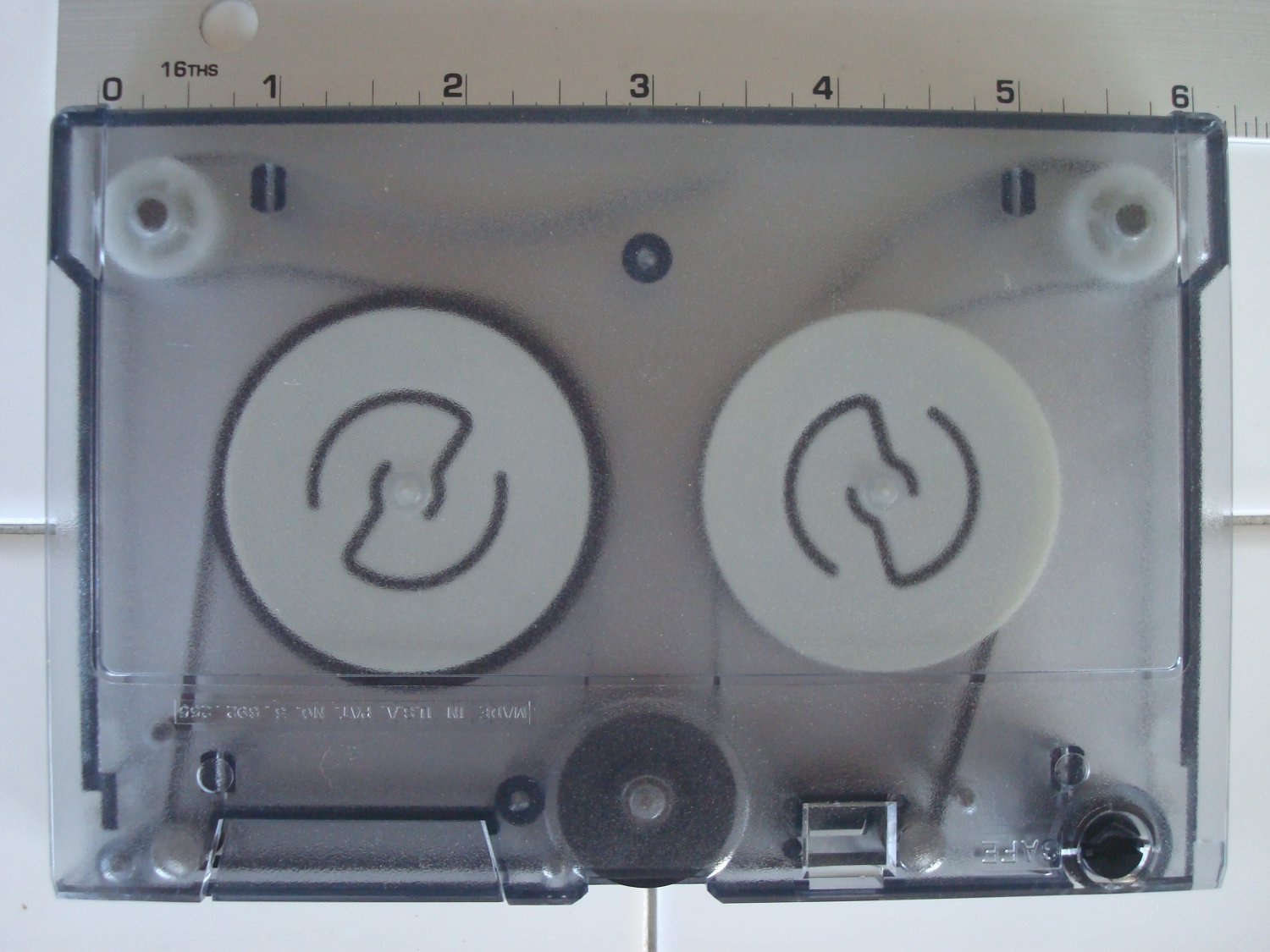


Appearance: Used, may have labels and/or markings
Functionality: Not Working
Description:
============
Similar to pictured, a QIC tape cartridge. No markings on cartridge to determine which exact type it is. Tape media has aged and is fragile, frayed, or broken – should only be used for collectible/display purposes - sold as-is.
Warranty and Returns:
=====================
This product is being sold AS-IS without any warranty. Returns are not accepted. To ensure that this is the right product for your needs, we’re happy to answer any questions.
Shipping:
=========
- Other shipping methods are available – contact us for details.
- Combined shipping is available for most items – contact us for details.
- Local pickup is also available at no cost.
About Us:
=========
The Computer Preservation Group is dedicated to the preservation of historical computers. To help fund ongoing operations, select items are made available. To learn more, please visit our website: www.computerpreservation.com. Thank you for your support!
Stock#:J18274.WD#.75
Details from https://en.wikipedia.org/wiki/Quarter-inch_cartridge:
Quarter inch cartridge tape (abbreviated QIC, commonly pronounced "quick") is a magnetic tape data storage format introduced by 3M in 1972, with derivatives still in use as of 2009. QIC comes in a rugged enclosed package of aluminum and plastic that holds two tape reels driven by a single belt in direct contact with the tape. The tape was originally 1⁄4-inch (6.35 mm) wide and anywhere from 300 to 1,500 feet (91 to 457 m) long. Data is written linearly along the length of the tape in one track (mostly on pre-1980 equipment), or it is serialized and written "serpentine" one track at a time, the drive reversing direction at the end of the tape, each track's data written in the opposite direction to its neighbor. Since the introduction of QIC, it has been widely used and many variations exist. There is a QIC trade association that publishes QIC standards which include interfaces and logical formats. To a very large extent it was the efficiency and openness of this organization which encouraged hardware and software developers to use this type of drive and media.
Features of QIC
The QIC cartridge is distinguished from other types of tape cartridges by the fact that it contains an endless drive belt which is moved at a uniform speed by a motorised capstan. Since the belt is in contact with the tape, this ensures both that the tape moves at uniform speed, and that neutral tension is maintained at all times. This is in contrast to cassette tapes or DATs where the tape is moved past the head by a capstan and pinch wheel, but the takeup reel is driven by a servo motor or slipping clutch.
The tape in a QIC cartridge is not physically attached to the reels and is never completely unwound. This is again different from other cassettes or cartridges, which generally have some form of clip anchoring on at least one end of the tape. To ensure that the tape is never completely unwound, each end has a small beginning or end of tape hole which is detected by an optical sensor, and an "early warning" hole further from each end. If a defective drive—for example with fluff in a sensor—winds the tape past the BOT or EOT marker, the tape will detach from the spool and the cartridge will be unusable unless it is reattached.
The design of the QIC tape cartridge is very robust: the aluminium baseplate is an eighth of an inch thick, and the robust plastic cover can withstand abuse and impacts that would damage other tape formats.
However, because the tape is belt-driven, seeking back and forth can eventually cause the tape to become unevenly tensioned. It is therefore necessary to periodically retension the cartridge. This is accomplished by winding the tape from beginning to end and back in one operation, allowing the belt to equalize itself. For newer QIC drives that use a SCSI interface, there is a SCSI "RETENSION" command to do this.
When the cartridge gets old, the belt may not provide enough friction to turn the takeup spool smoothly. When this happens, the tape will need to be replaced.
In some cases a cartridge must be formatted before use. The capability to do this is in the drive rather than the host computer.
Generations
SunOS 4.1.1 QIC-24 tape
The first QIC tape format was the 5.875 in by 3.875 in (150 x 99mm) Data Cartridge (DC) format with two internal belt-driven reels and a metal base. The original product, the DC300, had 300 feet of tape and held 200 kilobytes. Various QIC DC recording formats have appeared over the years,[1] including:
QIC-11: a four-track format giving 20 MB on a 450 ft DC300XL cartridge
QIC-24: nine-track, 45 MB or 60MB on a 450 or 600 ft (DC600A) cartridge respectively
QIC-120: 15-track, 125 MB, DC6150 cartridge
QIC-150: 18-track, 150 MB, DC6150 cartridge
Functionality: Not Working
Description:
============
Similar to pictured, a QIC tape cartridge. No markings on cartridge to determine which exact type it is. Tape media has aged and is fragile, frayed, or broken – should only be used for collectible/display purposes - sold as-is.
Warranty and Returns:
=====================
This product is being sold AS-IS without any warranty. Returns are not accepted. To ensure that this is the right product for your needs, we’re happy to answer any questions.
Shipping:
=========
- Other shipping methods are available – contact us for details.
- Combined shipping is available for most items – contact us for details.
- Local pickup is also available at no cost.
About Us:
=========
The Computer Preservation Group is dedicated to the preservation of historical computers. To help fund ongoing operations, select items are made available. To learn more, please visit our website: www.computerpreservation.com. Thank you for your support!
Stock#:J18274.WD#.75
Details from https://en.wikipedia.org/wiki/Quarter-inch_cartridge:
Quarter inch cartridge tape (abbreviated QIC, commonly pronounced "quick") is a magnetic tape data storage format introduced by 3M in 1972, with derivatives still in use as of 2009. QIC comes in a rugged enclosed package of aluminum and plastic that holds two tape reels driven by a single belt in direct contact with the tape. The tape was originally 1⁄4-inch (6.35 mm) wide and anywhere from 300 to 1,500 feet (91 to 457 m) long. Data is written linearly along the length of the tape in one track (mostly on pre-1980 equipment), or it is serialized and written "serpentine" one track at a time, the drive reversing direction at the end of the tape, each track's data written in the opposite direction to its neighbor. Since the introduction of QIC, it has been widely used and many variations exist. There is a QIC trade association that publishes QIC standards which include interfaces and logical formats. To a very large extent it was the efficiency and openness of this organization which encouraged hardware and software developers to use this type of drive and media.
Features of QIC
The QIC cartridge is distinguished from other types of tape cartridges by the fact that it contains an endless drive belt which is moved at a uniform speed by a motorised capstan. Since the belt is in contact with the tape, this ensures both that the tape moves at uniform speed, and that neutral tension is maintained at all times. This is in contrast to cassette tapes or DATs where the tape is moved past the head by a capstan and pinch wheel, but the takeup reel is driven by a servo motor or slipping clutch.
The tape in a QIC cartridge is not physically attached to the reels and is never completely unwound. This is again different from other cassettes or cartridges, which generally have some form of clip anchoring on at least one end of the tape. To ensure that the tape is never completely unwound, each end has a small beginning or end of tape hole which is detected by an optical sensor, and an "early warning" hole further from each end. If a defective drive—for example with fluff in a sensor—winds the tape past the BOT or EOT marker, the tape will detach from the spool and the cartridge will be unusable unless it is reattached.
The design of the QIC tape cartridge is very robust: the aluminium baseplate is an eighth of an inch thick, and the robust plastic cover can withstand abuse and impacts that would damage other tape formats.
However, because the tape is belt-driven, seeking back and forth can eventually cause the tape to become unevenly tensioned. It is therefore necessary to periodically retension the cartridge. This is accomplished by winding the tape from beginning to end and back in one operation, allowing the belt to equalize itself. For newer QIC drives that use a SCSI interface, there is a SCSI "RETENSION" command to do this.
When the cartridge gets old, the belt may not provide enough friction to turn the takeup spool smoothly. When this happens, the tape will need to be replaced.
In some cases a cartridge must be formatted before use. The capability to do this is in the drive rather than the host computer.
Generations
SunOS 4.1.1 QIC-24 tape
The first QIC tape format was the 5.875 in by 3.875 in (150 x 99mm) Data Cartridge (DC) format with two internal belt-driven reels and a metal base. The original product, the DC300, had 300 feet of tape and held 200 kilobytes. Various QIC DC recording formats have appeared over the years,[1] including:
QIC-11: a four-track format giving 20 MB on a 450 ft DC300XL cartridge
QIC-24: nine-track, 45 MB or 60MB on a 450 or 600 ft (DC600A) cartridge respectively
QIC-120: 15-track, 125 MB, DC6150 cartridge
QIC-150: 18-track, 150 MB, DC6150 cartridge


